
The Menthol Elf framework explains how the stories and resources support emotional literacy, wellbeing conversations, and gentle self-regulation practice for children aged 4-11.
Why Menthol Elf Exists
Children often feel things before they have the words to explain them. Worry, frustration, sadness, embarrassment, pressure, and self-doubt can show up in bodies, behaviour, friendships, learning, and transitions.
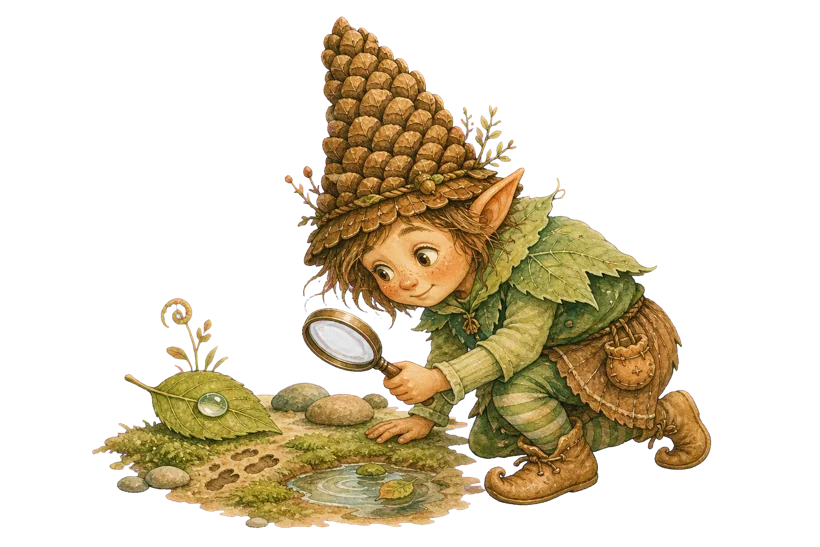
Menthol Elf gives children a gentle story world where feelings can be noticed safely, named kindly, and explored without shame. The aim is not to remove difficult feelings, but to help children understand them and practise small tools that may make those feelings easier to carry.
The Core Framework
Every Menthol Elf story and resource is built around a simple emotional learning pathway:
- Notice: spot body clues, behaviour clues, and changes in the story world.
- Name: use simple, kind language for the feeling.
- Understand: explore what the feeling may be connected to.
- Calm: practise one gentle coping or regulation tool.
This is a story and discussion framework, not a clinical model. It helps adults open safe conversations and helps children practise emotional language through characters rather than pressure or disclosure.
How The Stories Work
Menthol Elf stories take place in the Valley of Calm, where nature gently reflects emotional states. A feeling may appear as mist, wind, clouds, ripples, wobbly branches, or another soft metaphor. Menthol Elf notices the feeling, names it with care, seeks guidance, and practises a simple strategy with the child reader or listener in mind.
- One story focuses on one main emotional challenge.
- The feeling is represented through a gentle metaphor, never a frightening villain.
- Magic supports awareness and regulation, but does not erase feelings instantly.
- Each story includes reassurance, reflection, and a practical calming or coping tool.
- Children can talk about the character’s feeling before talking about their own.
What The Framework Covers
The framework supports age-appropriate emotional literacy across two official writing bands. Narrower developmental stages are used internally as calibration notes, not as public target bands for new books.
- Ages 4-7: recognising and naming feelings, understanding that feelings change, trying simple calming tools, empathy, friendship repair, asking for help, and trying again.
- Ages 8-11: handling frustration, disappointment, fairness, confidence, responsibility, perspective-taking, self-reflection, resilience, identity, social pressure, managing overwhelm, and kind leadership.
When To Use Menthol Elf
Menthol Elf can be used before, during, or after everyday emotional moments. It works best as a gentle conversation starter rather than a correction or consequence.
- During story time, circle time, PSHE, and wellbeing sessions.
- In calm corners, nurture spaces, and quiet reflection areas.
- Before transitions such as bedtime, school, new routines, or first days.
- After friendship wobbles, worries, disappointment, or moments of overwhelm.
- When adults want to build emotional vocabulary without forcing personal disclosure.
Using The Framework Safely
Menthol Elf should be used gently, flexibly, and within the safeguarding and wellbeing policies of the setting. Children should never be shamed for emotions or required to share personal experiences publicly.
- Offer strategies as invitations, not demands.
- Let children reflect through the story character if that feels safer.
- Avoid asking children to disclose sensitive personal experiences in front of a group.
- Use the stories to support language and reflection, not to diagnose or assess.
- Seek appropriate support if a child’s feelings are intense, persistent, unsafe, or affecting daily life.
What Menthol Elf Is Not
Menthol Elf is not therapy, counselling, crisis support, safeguarding advice, or a clinical mental health programme. It does not diagnose, assess, treat, or cure mental health conditions.
For full boundaries and public guidance context, please read the Disclaimer.