
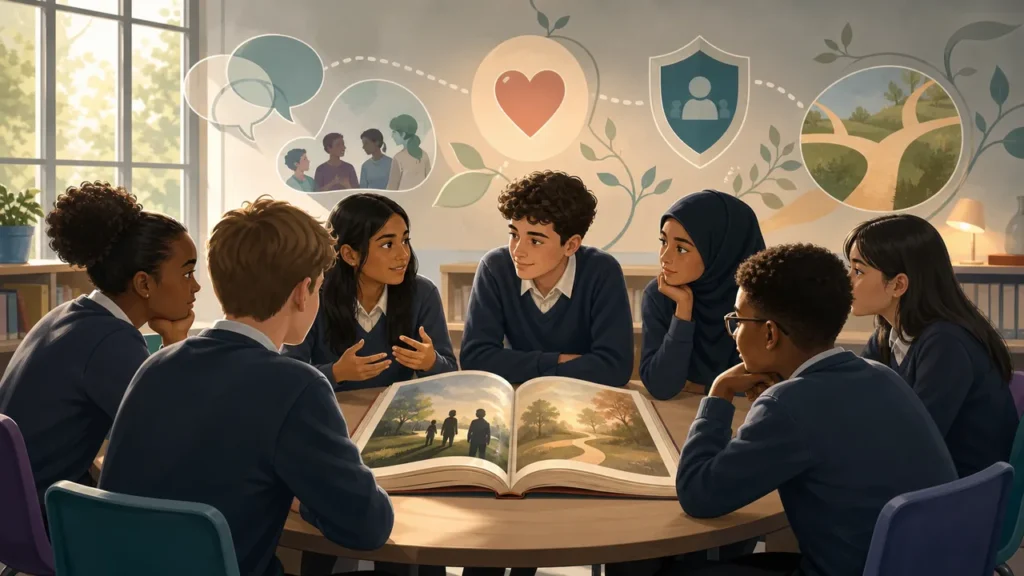
In classrooms across the country, pupils are taught how to stay safe, build healthy relationships, manage emotions and prepare for adult life. This is the work of PSHE: Personal, Social, Health and Economic education. Yet if PSHE is to be more than a list of rules and warnings, it needs something deeply human at its centre. It needs narrative.
Stories help young people understand the world because stories are how people often make sense of life. A lesson about peer pressure, for example, can tell pupils to “make safe choices”. But a story about a teenager who feels pushed into doing something they are uncomfortable with allows pupils to see the emotions, pressures and consequences involved. Suddenly, the issue is no longer abstract. It feels real.
This matters because PSHE deals with some of the most sensitive areas of growing up: friendship, bullying, mental health, consent, online safety, identity, family life and personal responsibility. These are not topics that can be fully understood through definitions alone. Pupils need opportunities to imagine situations, consider different viewpoints and ask, “What would I do?”
Narrative also builds empathy. When pupils hear or read about someone being excluded, judged, anxious or unsafe, they are invited to step into another person’s experience. This can help them understand why respect, kindness and responsibility matter. PSHE is not simply about knowing the correct answer; it is about developing the judgement and compassion needed to live well with others.
Stories also create a safer way to discuss difficult issues. Not every pupil will feel comfortable talking about their own experiences, especially when topics are personal or emotional. A fictional character, case study or real-life scenario gives the class a shared example to discuss without forcing anyone to reveal private information. Pupils can explore what a character might feel, what choices they have, and what support they might need.
At its best, narrative can also make PSHE more inclusive. Stories can show different families, cultures, identities, abilities and life experiences. This helps pupils recognise that there is no single “normal” way to grow up. It can challenge stereotypes and help children feel that their own lives and communities have a place in the curriculum.
Of course, stories must be chosen with care. A PSHE narrative should be age-appropriate, sensitive and supported by clear teaching. Stories should not be used to shock pupils or replace accurate information. Instead, they should help pupils connect facts with feelings, decisions and consequences.
In the end, PSHE is about preparing young people for real life. Real life is complicated, emotional and full of choices. That is why narrative matters. Stories allow pupils to practise thinking before they act, to understand others before they judge, and to see the human meaning behind the lessons they are taught.
If PSHE is meant to help young people navigate life, then narrative is not just a useful teaching tool. It is essential.