
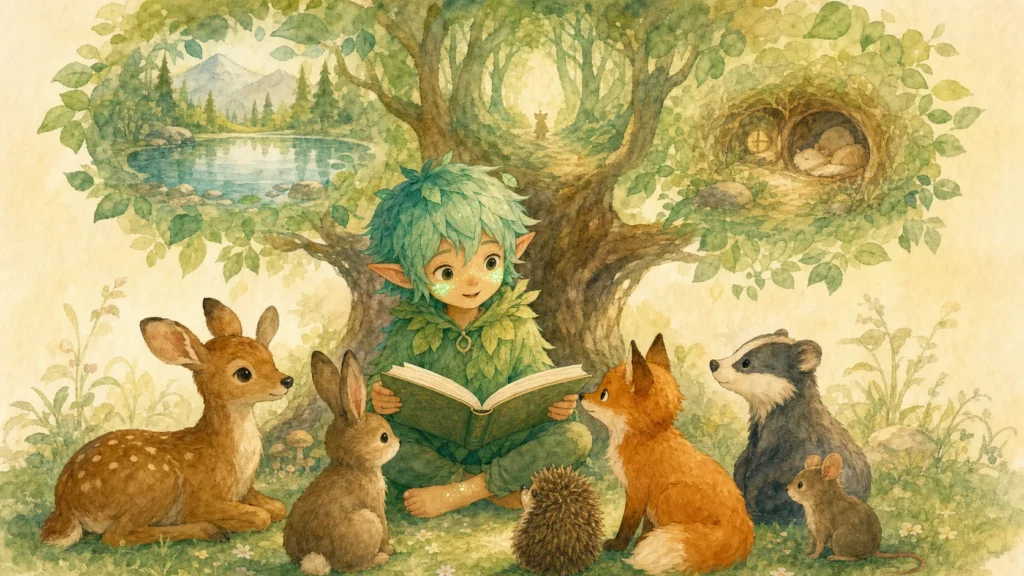
Some children find it easier to explore feelings when a story gives them a character, image or place to talk about.
A worry might become a twisting path. Sadness might become a listening cloud. Anger might feel like rumbling acorns or stormy branches. These metaphors can offer a little distance, but children may understand or respond to them in different ways.
Stories Can Offer Shared Language
A parent or teacher might ask, “Does this feel a little like Worry Woods?” or “Would a Breathing Burrow moment help?” The child can agree, choose different words, or decide not to talk.
Menthol Elf stories use a simple path: notice, name, understand and calm. It is one possible structure for a supportive conversation, not a clinical model or a promise that a particular tool will work.
Reading Together
A gentle story can help an adult and child share attention and consider what a character tries. The useful part may simply be a trusted adult nearby, a calm voice and permission to stop or return later.
After Reading, You Could Ask
- “Was there a part you noticed?”
- “What helped the character, if anything?”
- “Is there a tool you would like to try, or would you rather leave it there?”
A gentle boundary: Stories support everyday emotional literacy and conversation. They are not assessment, diagnosis, therapy, safeguarding advice or a substitute for qualified support.